
Views: 284 Author: Site Editor Publish Time: 2026-04-16 Origin: Site


Efficiently moving material is the heartbeat of any milling operation. If your conveyor system fails or runs inefficiently, your entire production line grinds to a halt. In a modern flour mill, moving raw grain from intake to the cleaning section, and finally transporting finished flour to packaging, requires specialized machinery. This guide explores the essential equipment designed for grain, flour, rice, and feed mill environments to ensure maximum uptime and product purity.
A flour mill isn't just about grinding; it is about the seamless flow of bulk solids. A high-quality conveyor system minimizes labor costs and prevents product contamination. When dealing with fine powders like flour or abrasive raw grains, the choice of equipment determines your profit margins. We see many mills struggling with dust leakage or grain breakage because they use the wrong transport method.
The right conveyor system handles different stages of production. You need high-capacity machines for raw grain intake and gentle, enclosed systems for finished flour. Using a specialized powder and bulk material screw conveyor ensures that fine particles don't escape into the air, keeping your facility clean and compliant with safety standards.
| Factor | Requirement in Flour Milling | Recommended Equipment |
| Dust Control | High (Explosion Risk) | Tube Screw Conveyor |
| Vertical Space | Limited | Bucket Elevator |
| Distance | Long Horizontal | Chain Conveyor |
| Material Type | Fragile/Finished Flour | Food Industry Bucket Elevator |
When you need to move grain or flour upward, the bucket elevator is the undisputed king. It takes up very little floor space while providing massive vertical lift. For flour mills, we categorize these into two main types based on the material's sensitivity.
For raw grain arriving at the silos, a standard bucket elevator provides the speed needed to unload trucks quickly. These units use durable steel or plastic buckets bolted to a high-strength belt. They can move hundreds of tons per hour, ensuring your intake section never becomes a bottleneck.
Once the grain is processed into flour, hygiene becomes the top priority. This is where a food industry bucket elevator comes into play. These systems often feature stainless steel construction and specialized bucket designs that prevent "back-legging" (material falling back down the shaft). We design these to be easily cleaned, reducing the risk of mold or bacterial growth in the production line. A food industry bucket elevator also uses "slow-speed" discharge options to prevent damaging delicate flakes or specialized flour blends.
Space Efficiency: They use verticality, leaving room for milling machines.
Reliability: With fewer moving parts than complex pneumatic systems, they offer high uptime.
Low Power Consumption: Gravity helps with the discharge, making them energy-efficient choices for any conveyor system.
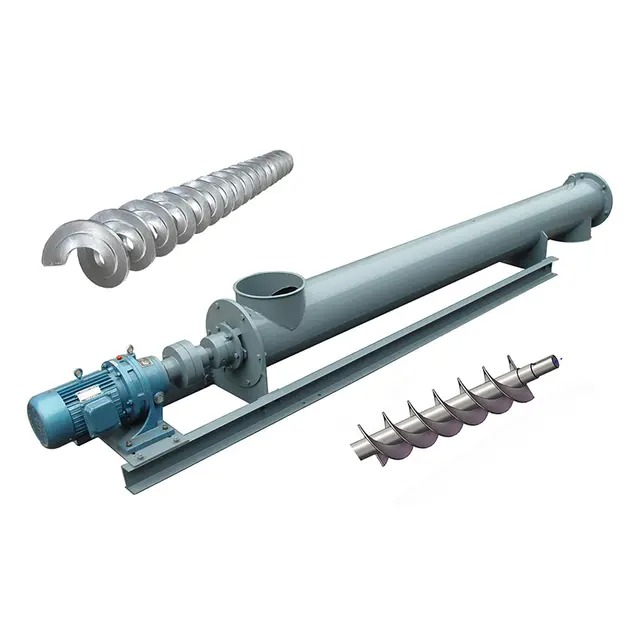
The screw conveyor (also known as an auger) is perhaps the most common component in a flour mill's conveyor system. Its simple design—a rotating helical screw blade within a trough or tube—makes it incredibly effective for short to medium-distance transport.
In the milling section, dust is your enemy. A tube screw conveyor offers a completely enclosed environment. Because the screw sits inside a sealed pipe, flour cannot escape, and contaminants cannot enter. This is vital for maintaining the "clean-label" status of your final product. These units are also excellent for dosing additives into the flour stream with high precision.
For heavier tasks, the powder and bulk material screw conveyor is built with thicker flighting and reinforced bearings. These machines move dense materials like bran or feed pellets. They handle the high torque required when starting under a full load. Whether you are moving material from a sifter or feeding a bagging machine, a well-placed powder and bulk material screw conveyor ensures a steady, pulse-free flow.
We often recommend variable speed drives for these conveyors. This allows operators to fine-tune the flow rate to match the capacity of the rollers or sifters downstream. It prevents "choking" the system, which is a common cause of downtime in older mills.
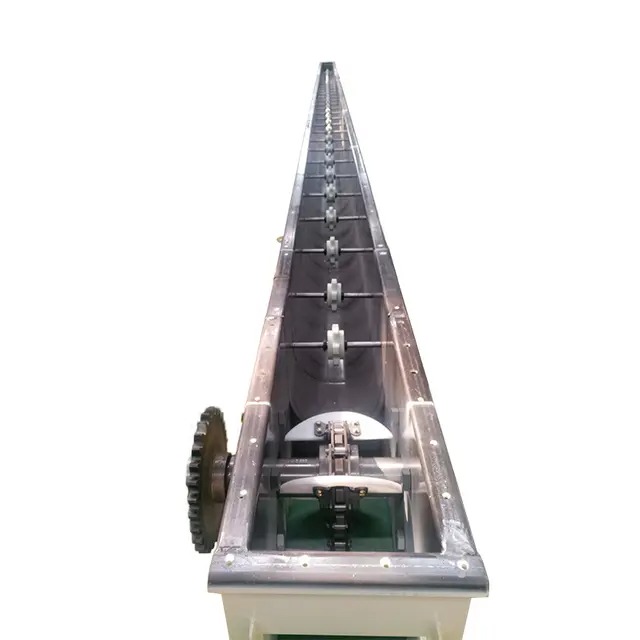
When you need to move bulk grain horizontally over long distances, nothing beats a chain conveyor with scraper. These machines, also known as "en-masse" conveyors, use a chain equipped with flighting (scrapers) to pull a solid column of material through a rectangular trough.
A chain conveyor with scraper is much more efficient than a flat belt for grain. It moves more material in a smaller cross-section. This means you can install a high-capacity conveyor system in tight overhead spaces. Because the material moves as a single mass, there is very little friction between the grains, which significantly reduces grain breakage and dust generation.
In some complex mill layouts, you might need a ring chain conveyor with scraper. These specialized versions allow for a continuous loop of material flow. They are perfect for feeding multiple bins or sifters in a row. A ring chain conveyor with scraper can have multiple discharge points, giving the miller total control over where the product goes.
We find that these systems are the preferred choice for for grain, flour, rice, and feed mill operations that require 24/7 reliability. The heavy-duty chains are designed for years of service with minimal stretching or wear.
While mechanical systems are great for bulk, a modern conveyor system often incorporates pneumatic (air) transport for the fine milling stages. This involves using high-pressure fans or vacuum systems to "blow" flour through pipes.
Pneumatic systems are incredibly flexible. You can run pipes around corners, through walls, and up multiple floors without needing heavy motors at every turn. It is the ultimate "clean" solution because the entire system is under pressure or vacuum, making leaks almost impossible.
Most efficient mills don't choose just one. They use a chain conveyor with scraper for the heavy lifting at the silo and a pneumatic conveyor system for moving the finished flour to the packing bins. This hybrid approach balances energy efficiency with plant flexibility.
While not as common for loose flour due to dust issues, the belt-driven conveyor system is essential in the packaging department. Once the flour is in bags, you need to move those bags to the warehouse.
A belt conveyor provides a smooth, vibration-free ride for bagged products. In large-scale for grain, flour, rice, and feed mill facilities, automated palletizing lines rely on these conveyors. They can be equipped with sensors to sort different bag sizes or brands automatically.
| Equipment Type | Best For | Main Weakness |
| Bucket Elevator | Vertical Lift | High cleaning requirement |
| Screw Conveyor | Dosing/Sealing | Limited distance |
| Chain Conveyor | High Volume | Higher initial cost |
| Belt Conveyor | Bagged Goods | Dust exposure (if open) |
No matter which conveyor system you choose, maintenance is non-negotiable. Flour dust is highly explosive. A single spark from a misaligned chain conveyor with scraper or a hot bearing on a bucket elevator can lead to a disaster.
Always ensure your tube screw conveyor seals are intact. Use aspiration systems (dust collectors) at every transfer point where grain or flour drops from one machine to another. This keeps the "Lower Explosive Limit" (LEL) of the dust in the air at a safe level.
Modern systems include "plug" sensors and speed monitors. If a powder and bulk material screw conveyor gets jammed, the sensor trips the motor before the belt slips or the chain breaks. This proactive approach saves thousands of dollars in repair costs and lost production time.
Selecting the right conveyor system is a balance of capacity, hygiene, and budget. Whether you are installing a bucket elevator for vertical lift or a chain conveyor with scraper for horizontal transport, each piece must work in harmony. For those in the for grain, flour, rice, and feed mill industry, the goal is always the same: move the highest quality product with the lowest possible waste. By choosing specialized tools like the food industry bucket elevator and the tube screw conveyor, you ensure your mill stays competitive and safe for years to come.
Q: Which conveyor is best for preventing flour contamination?
A: The tube screw conveyor is generally the best for finished flour because it is fully enclosed, preventing dust from escaping and external contaminants from entering the product stream.
Q: Can a bucket elevator handle wet grain?
A: While they can, it is not recommended without specialized "vented" buckets. Wet grain tends to stick to the bottom of the buckets, reducing capacity and causing hygiene issues.
Q: What is the main difference between a standard and a food industry bucket elevator?
A: A food industry bucket elevator typically uses stainless steel, food-grade belts, and "easy-clean" casings to meet strict health regulations.
We at AGS take immense pride in our heritage as a premier manufacturer of milling components. Operating from our state-of-the-art factory, we bring decades of engineering expertise to the global market. We don't just sell parts; we provide integrated solutions for the most demanding for grain, flour, rice, and feed mill environments. Our strength lies in our rigorous quality control and our ability to customize equipment like the ring chain conveyor with scraper to fit your specific floor plan. When you work with us, you are partnering with a team that understands the "dust-to-loaf" journey better than anyone else in the industry.


