
Views: 292 Author: Site Editor Publish Time: 2026-04-12 Origin: Site


Understanding the transformation of raw grains into fine, nutritious flour requires a deep dive into the engineering marvel known as Flour Mill Machinery. This equipment isn't just a single tool; it is a complex, synchronized system designed to clean, temper, grind, and refine grain. Whether you are looking to start a commercial milling business or simply curious about industrial food processing, knowing how Flour Mill Machinery operates is essential. In this guide, we break down the mechanics, the specific components involved, and the advanced technology that ensures high-quality output.
When we talk about Flour Mill Machinery, we refer to the entire assembly of industrial equipment used to process cereal grains like wheat, maize, or rye into flour. Unlike primitive stone mills, modern Flour Mill Machinery uses a multi-stage approach to ensure purity and consistency.
The primary goal of these machines is separation. A grain of wheat has three main parts: the bran (outer shell), the germ (embryo), and the endosperm (starchy interior). High-quality white flour consists mostly of the endosperm. Therefore, Flour Mill Machinery must be precise enough to strip away the bran and germ without crushing them into the white flour.
If the machinery is not calibrated correctly, the bran shatters. This specks the flour with dark particles, reducing its commercial value and shelf life. Advanced Flour Mill Machinery uses a series of rollers and sieves to gently peel the grain apart rather than smashing it. This ensures the starch granules remain intact, which is vital for the baking quality of the final product.
| Component Category | Primary Function | Key Equipment Examples |
| Cleaning Section | Removes impurities and dust | Vibratory Separator, Destoner |
| Milling Section | Reduces grain size | Roller Mill, High-Speed Impactor Detacher |
| Purification Section | Separates bran from semolina | Flour Purifier Machine |
| Sifting Section | Grades flour by particle size | Flour Sieve Machine, Plansifter |
The operation of Flour Mill Machinery follows a logical, sequential flow. It begins with the intake of raw grain and ends with the packaging of finished flour. The "how it works" aspect is best understood through the "Break and Reduction" system.
Before any grinding happens, the grain must be pristine. Flour Mill Machinery in the cleaning section uses magnets to catch metal, air currents to lift dust, and gravity tables to remove stones. Once clean, we add moisture in a process called "conditioning" or "tempering." This toughens the bran so it stays in large pieces during milling and softens the endosperm for easier grinding.
The heart of the mill is the roller mill. The grain passes through pairs of grooved steel rollers spinning at different speeds. This action shears the grain open. We call this the "break" stage. It doesn't produce finished flour yet; instead, it creates a mixture of coarse flour, bran chunks, and "middlings" (gritty pieces of endosperm).
After every break, the material moves to a Flour Sieve Machine or a Flour Vibration Sieve. These machines shake the mixture through various mesh layers. It sorts the particles by size. The large bran pieces go back for more grinding, while the fine endosperm moves toward the "reduction" rollers to be turned into smooth flour.
To achieve professional-grade results, standard grinders aren't enough. We need specialized Flour Mill Machinery to handle specific tasks in the refining process. Two of the most important units are the Flour Purifier Machine and the Flour Sieve Machine.
The Flour Purifier Machine is where the magic of "white" flour happens. It uses a combination of vibration and controlled air currents to separate the light bran from the heavier, pure endosperm.
Layering: The machine spreads the material thin over a shaking sieve.
Air Lift: Air blows upward through the sieve. Because bran is lighter and has a larger surface area, the air lifts it away.
Purity: The heavy, pure semolina falls through the mesh, ready for the final reduction.
Without a Flour Purifier Machine, the flour would contain tiny brown specks, making it lower "grade" in the eyes of commercial bakers.
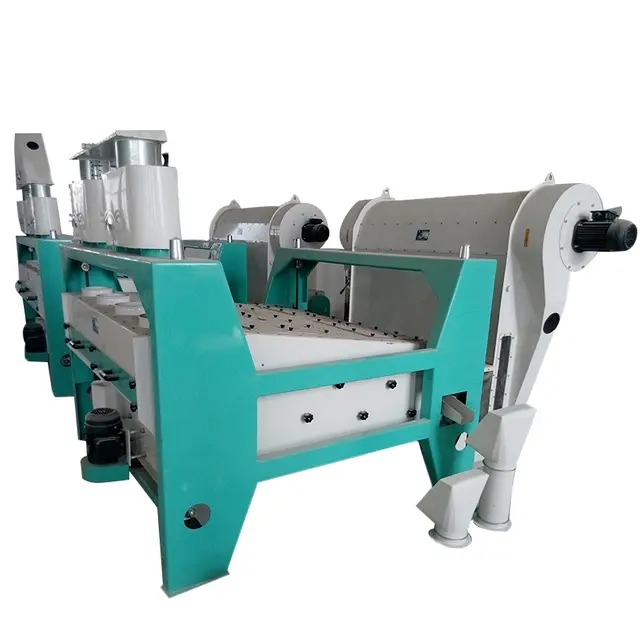
The Flour Sieve Machine acts as the traffic controller of the mill. Modern versions, such as the Flour Vibration Sieve, utilize high-frequency oscillations to ensure no particle gets stuck.
Multi-deck design: These machines often have up to 10 layers of sieves.
Particle separation: They separate the "overs" (too big) from the "throughs" (just right).
Efficiency: High-efficiency Flour Sieve Machine units prevent "over-milling," which saves energy and prevents heat damage to the flour.
In high-capacity setups, we need to maximize the yield of every grain. This is where auxiliary Flour Mill Machinery like the High-Speed Impactor Detacher and the Small Rotary Feeder come into play.
Sometimes, after the roller mill, small flakes of endosperm remain stuck to the bran. The High-Speed Impactor Detacher uses centrifugal force and high-speed pins to strike these flakes. This "detaching" action frees the flour without crushing the bran further. It is a vital piece of Flour Mill Machinery for mills looking to increase their extraction rate by 1% or 2%—which translates to massive profits at scale.
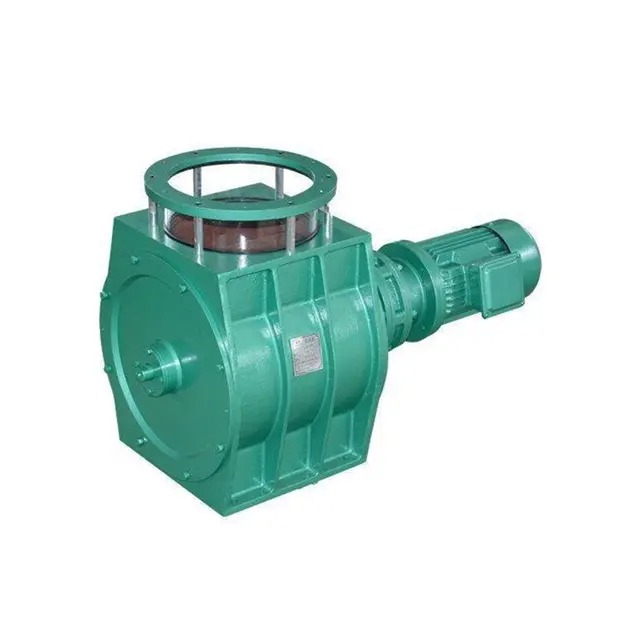
A mill is a continuous system, so we must control the speed of the grain. The Small Rotary Feeder is used to meter the flow of flour or grain into pneumatic lines or other machines.
Consistency: It prevents clogs by ensuring a steady "pulse" of material.
Air-Locking: In many systems, it also acts as an air seal, preventing dust from blowing back into the previous stage.
Similarly, the Vibro Silo Discharger ensures that stored grain or flour doesn't get stuck in the bottom of a large bin. It uses vibration to break "bridging" (when flour forms an arch and stops falling), keeping the Flour Mill Machinery downstream constantly fed.
Today’s Flour Mill Machinery isn't just heavy iron; it is smart. Integrated sensors and PLC (Programmable Logic Controller) systems allow operators to monitor the entire process from a single screen.
When you connect a Flour Vibration Sieve to a central control system, the mill can automatically adjust the feed rate of the Small Rotary Feeder based on how much material the sieve can handle. If the sieve becomes overloaded, the system slows down the intake to prevent a breakdown.
Maintaining Flour Mill Machinery involves regular checks on:
Roller Sharpness: Grooved rollers eventually dull and need "re-fluting."
Sieve Integrity: Even a tiny hole in a Flour Sieve Machine mesh can ruin a whole batch of flour.
Vibration Levels: We use the Vibro Silo Discharger to keep flow smooth, but excessive vibration in other machines can indicate bearing failure.
Choosing Flour Mill Machinery depends on your target market. Are you producing bread flour, cake flour, or whole wheat? Each requires a different configuration.
Small-Scale: Might only require a basic roller mill and a simple Flour Vibration Sieve.
Industrial-Scale: Requires a full suite, including a Flour Purifier Machine, multiple High-Speed Impactor Detacher units, and complex pneumatic transport systems.
Not all Flour Mill Machinery is built for every grain. Corn (maize) is much harder than wheat and requires more robust rollers and different sieve openings in the Flour Sieve Machine. Ensure your machinery is rated for the specific "hardness" of your target grain.
At AGS, we don't just sell equipment; we provide the backbone for food security across the globe. We have spent years perfecting our Flour Mill Machinery to meet the highest international standards. Our factory is a hub of innovation where we manufacture everything from the heavy-duty Flour Purifier Machine to the precise Small Rotary Feeder.
We take pride in our "turn-key" capability. This means we can design your entire mill layout, manufacture the Flour Sieve Machine and Vibro Silo Discharger units, and even handle the installation. Our strength lies in our engineering team's ability to customize solutions. Whether you need a specific Flour Vibration Sieve for a unique grain or a High-Speed Impactor Detacher to squeeze more profit out of your existing line, we have the technical expertise to make it happen. We believe that quality flour starts with quality machinery, and at AGS, that is exactly what we deliver.
Understanding "What Is Flour Mill Machinery and How Does It Work?" is about recognizing the harmony between cleaning, grinding, and sifting. Each component, from the Small Rotary Feeder that starts the process to the Flour Sieve Machine that finishes it, plays a critical role. By utilizing advanced tools like the Flour Purifier Machine and the High-Speed Impactor Detacher, modern mills can produce the high-quality, pure flour that consumers demand. As the industry evolves, the integration of smarter, more efficient Flour Mill Machinery will continue to define the future of food production.
Q: What is the most important part of Flour Mill Machinery?
A: While all parts are vital, the Roller Mill is the heart of the operation. However, the Flour Sieve Machine is equally important for ensuring the final product meets size specifications.
Q: Why do I need a Flour Purifier Machine?
A: It is essential for making high-grade white flour. It removes the tiny pieces of bran that a standard sieve might miss, ensuring the flour is pure and bright.
Q: How long does typical Flour Mill Machinery last?
A: With proper maintenance of parts like the Vibro Silo Discharger and regular re-fluting of rollers, industrial machinery can last 20 to 30 years.
Q: What does a High-Speed Impactor Detacher actually do?
A: It hits the bran particles at high speed to "detach" any clinging flour. This increases your total flour yield, making your mill more profitable.
Q: Can one Flour Vibration Sieve handle different types of grain?
A: Yes, but you must change the internal sieve frames and mesh sizes to match the particle size of the grain you are processing.


